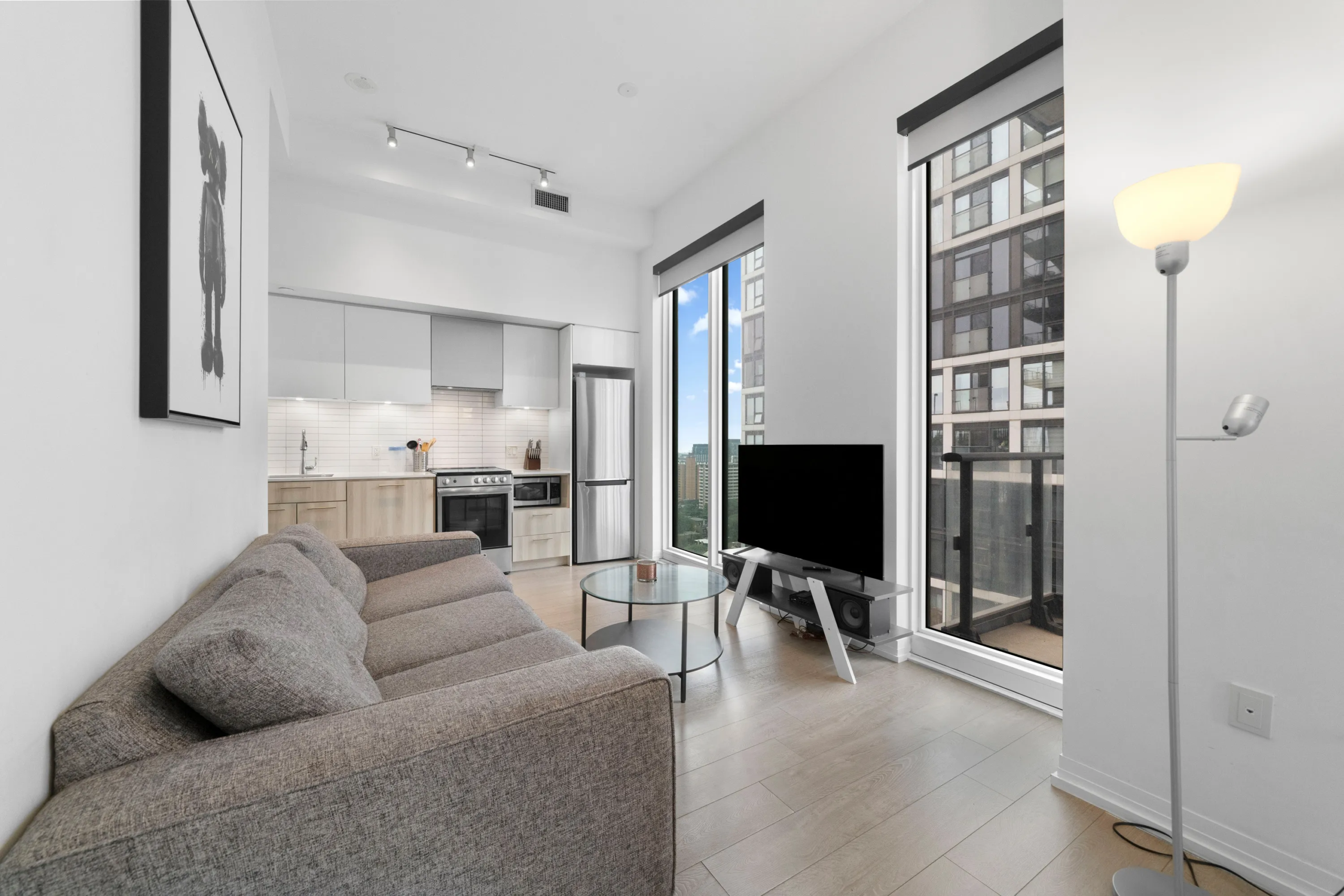
Selling a condo in Toronto is not the same as selling a house. I say this to nearly every client who calls me, and I mean it as a warning, not a platitude. The selling process for a condo has layers most sellers don’t see coming: condo fees, status certificates, condo corporation rules, maintenance fees, and a condo market that moves differently from the rest of the Toronto real estate market.
Whether you own a unit in downtown Toronto or a building in the west end near High Park, getting a strong final sale price starts with knowing what makes condo selling different from selling a detached home.
This guide covers everything you need to know to go from thinking about listing to handing over keys on closing day with as little stress as possible. By the end, you’ll have a clear picture of each step in the selling process, the closing costs to expect, and the most common mistakes condo sellers make along the way.
Is It a Good Time to Sell a Condo in Toronto?
This is the first question I hear from almost every client. The honest answer: it depends on your unit, your building, and your timeline. The Toronto real estate market has gone through real shifts over the past few years, and the condo market in particular has felt more pressure than the detached home segment.
There are always buyers, though. The buyer pool for condos includes first time buyers who don’t have the budget for a house, downsizers looking to simplify, and investors seeking rental income. Price well, present your unit properly, and interested buyers will show up even when the condo market feels slow. The goal is to make smart decisions, not wait for perfect conditions.
What the Downtown Toronto Condo Market Looks Like Right Now
The current condo market in Toronto is what many agents describe as balanced, with pockets of competition in certain price ranges and building types. In areas like downtown Toronto and the west end, well-maintained condos with competitive pricing and reasonable maintenance fees are still generating multiple offers. Buildings with a strong condo corporation and clean financial history tend to outperform others in the same neighbourhood.
The thing I always tell condo sellers is this: don’t let headlines make decisions for you. A macro view of the market tells you little about what will happen with your specific unit. What matters is how your condo compares to similar condos in the same building or nearby, what your condo fees look like relative to the competition, and whether your building’s status certificate comes back clean. Those details are what buyers and their buyer’s agent are focused on, and they should be what you focus on too.
How to Get Your Condo Ready Before Listing
One of the biggest mistakes I see is sellers listing before their unit is truly condo ready. You only get one first showing, and buyers form opinions within the first few minutes of walking in. Preparation makes all the difference between a strong opening weekend and a listing that sits.
I worked with a client in a west end building near High Park a few years back. She had lived there for twelve years and loved the place, but the unit had accumulated a lot of furniture and personal items over time. We spent three weeks getting it condo ready before listing, and the result was a clean, bright space that felt significantly larger than the square footage suggested. It sold in four days with multiple offers on the table.
Minor Repairs That Make All the Difference
You don’t need to renovate before selling. What you need is to address anything giving a buyer a reason to negotiate down or walk away. A dripping faucet, scuffed baseboards, a broken closet door. These small things signal to buyers the unit hasn’t been well maintained, and they start calculating what it will cost them to fix it.
I recommend going room by room with a contractor before listing. Fix the minor repairs, apply a fresh coat of paint in a neutral colour, and make sure every light bulb works. These are low-cost changes that lift the perceived market value of your unit in a meaningful way, and they almost always pay for themselves in the final sale price.
Declutter and Remove Personal Items and Family Photos
Buyers need to picture themselves living in your space. This is difficult when every surface holds family photos or personal items. I ask all my clients to pack personal belongings into storage before the first showing. This isn’t about your taste. It’s about creating a blank canvas for prospective buyers to project their own lives onto.
A decluttered unit photographs better, shows better, and tends to sell faster. The emotional connection buyers make with a space is directly linked to how easy it is for them to picture their own life there. Remove the noise and let the condo speak for itself.
Professional Staging vs. In-House Designers
Some listing agents offer in house designers as part of their service. Others bring in professional staging companies. If your unit is vacant, professional staging is worth every dollar. Vacant units feel smaller and colder on camera and in person, and staged furniture helps prospective buyers understand how to use the space effectively.
If you’re still living in the unit, your agent should help you identify which pieces of furniture to remove or rearrange. Sometimes a few targeted rental pieces, a dining table, accent chairs, or a sofa in a brighter tone, are enough to refresh the look without a full stage. More buyers respond to a well-arranged, bright space than to one filled with personal items, regardless of how attractive those items are.
Understanding Condo Fees and What Buyers Really Want to Know
Maintenance fees are one of the most common topics I discuss with buyers looking at condos for sale in Toronto. High condo fees turn some buyers away immediately. Low fees are attractive, but they need context. A low-maintenance-fee building is not always better if the reserve fund is underfunded and a special assessment is on the horizon.
As a seller, be prepared to explain what the condo fees include. Buyers will ask, and their buyer’s agent will likely pull the status certificate to get the full picture. Being proactive about this information builds trust and removes friction from the negotiation.
What Maintenance Fees Cover in a Condominium Building
Depending on your building, maintenance fees typically cover water, building insurance, common area upkeep, and contributions to the reserve fund. Some older buildings in downtown Toronto include heat in the condo fees, which is a real selling point for prospective buyers comparing similar condos in the same neighbourhood. Others charge separately for parking and locker.
When I sit down with condo sellers, I help them put the fees in context. An $850 monthly fee in a building with a gym, concierge, and rooftop terrace is a different conversation than $850 in a building with almost no amenities. Frame the fees against what buyers get for them, and make sure your listing agent knows how to communicate this clearly during showings and negotiations. For a full breakdown of what buyers look at when evaluating fees, read my guide on condo maintenance fees.
The Status Certificate and Your Condo Corporation
Buyers who are serious about a condo in Toronto will request a status certificate. This document, issued by the condo corporation, tells the buyer everything about the unit’s financial standing, any outstanding special assessments, the building’s reserve fund status, and the rules of the corporation.
As a seller, you don’t produce the status certificate yourself. You order it through the condo corporation, and it takes up to ten business days to arrive. I always recommend ordering it before you list, so it’s ready the moment a serious offer comes in. A delay in delivering the status certificate is one of the most common reasons deals fall apart or closing dates get pushed.
The buyer’s lawyer reviews it closely. If there are red flags, such as a reserve fund well below the recommended level, pending litigation against the condo corporation, or a major special assessment on the horizon, the buyer’s agent will factor those into the negotiation. Getting ahead of this is one of the most important things you do as a seller, and it eliminates one of the biggest sources of deal-killing delays. Learn more about what the status certificate covers and how to order one.
Pricing Strategy: How to Price a Condo for Sale in Toronto
Pricing is where the selling process either gains momentum or loses it. Set the right price and you attract serious, motivated buyers. Overprice your unit and it sits, accumulates days on market, and ends up selling for less than it would have if priced correctly from the start.
The fastest way to sell a condo is to price it where the market is, not where you wish the market was. I have seen condo sellers in tough markets hold out for a number that made sense two years ago and end up settling for significantly less six months later after multiple price reductions and a stigmatized listing. Pricing right on day one is always the better path.
Comparing Similar Condos and Recent Sales in the Same Building
Your listing agent should pull comparable sales: similar condos that have sold in the same building or nearby buildings in the past 60 to 90 days. Look at units with similar square footage, floor level, exposure, and finishes. Pay attention to how long similar units took to sell and whether they received offers at or above the asking price.
In a building where a similar unit sold for $650,000 three months ago, your pricing strategy needs to account for any shift in market conditions since then. A strong listing agent walks you through the logic behind the number, not just hands you a figure and asks you to trust it. If the reasoning isn’t clear, ask more questions.
Avoid Overpricing in a Tough Market
In a buyer’s market or a tough market, overpricing is the fastest way to hurt your sale. Buyers today are well-informed. They have access to listing history and recent sales data. When a condo sits on the market for 45 days with no offers, buyers assume something is wrong, even if nothing is. Price reductions signal weakness and invite lower offers from every buyer who walks through the door.
The goal is to price your condo at market value from day one, generate early interest, and create competition among buyers. Even in a slower market, a well-priced unit in a desirable building draws more buyers than one sitting stale for weeks with a steadily dropping price. First impressions matter in real estate, and your listing’s first week on market is its strongest.
How to Market a Condo for Sale to Reach More Buyers
Once your unit is ready and priced correctly, the next step is a marketing campaign that reaches the right prospective buyers. Not all marketing campaigns are created equal, and the difference between a mediocre listing and a well-marketed one often means thousands of dollars in your pocket at the end of the real estate journey.
Professional Photos, Virtual Tours, and Digital Marketing
Every condo for sale in Toronto needs professional photos. Full stop. I have seen listings from other Toronto realtors using phone photos, and the results are predictable: fewer showings, lower offers, longer time on market. Professional photos are not optional in this city, at any price point. I’ve written about why investing in real estate photography pays off, and the data backs it up consistently.
Virtual tours have become a standard part of the selling process, and they remain valuable for reaching more buyers. Many buyers, especially those relocating or coming from outside Toronto, want to do a walkthrough online before committing to an in-person visit. A well-produced virtual tour filters out unserious buyers and brings in more motivated ones who have already decided they like what they see.
Google Ads, Campaigns, and Targeting the Right Buyer Pool
The most effective listing agents don’t stop at MLS. They run targeted digital marketing campaigns: Google ads, social media promotion, and direct email to their buyer pool to get your listing in front of people actively searching for a condo for sale in Toronto.
A strong marketing campaign identifies your target market and speaks directly to them. A one-bedroom in downtown Toronto attracts a different buyer than a two-bedroom in a family-friendly west end building near good schools and parks. Your listing agent should know the difference and market accordingly. When someone searches for a condo in your area and your listing appears twice, once on MLS and once through a targeted Google ad, your chances of attracting a serious offer go up in a real way.
Choosing the Right Listing Agent Makes All the Difference
Not all listing agents bring the same level of preparation, marketing skill, and negotiation skills to the table. The right realtor adds more to your final sale price than their commission costs you. The wrong one costs you money, time, and frustration that could have been avoided.
When you are interviewing listing agents, ask about their track record of recent sales in your building or nearby buildings. Ask how they market their listings and what their average sale-to-list ratio looks like. Ask them to walk you through their pricing strategy for your specific unit. A good agent will have answers. A great agent will have data and be willing to back up their recommendations with it.
Track Record, Negotiation Skills, and Toronto Realtors Who Know the Market
Toronto realtors vary enormously in experience and specialization. An agent who sells mostly houses in the suburbs is not the same as one who knows the condo market well. Your listing agent should understand condo corporations, status certificates, maintenance fees, and the nuances of condo law in Ontario. Strong negotiation skills matter too: the ability to hold firm on price, manage multiple offers, or work through a difficult buyer’s agent on the other side of a deal.
The best agents in this market have a track record of recent sales in the buildings and neighbourhoods where they operate. They know which buildings have issues and which ones buyers are competing over. Knowing how to choose a Toronto real estate agent is one of the most important decisions you make in this process, and it shows up directly in your final sale price.
Selling a Tenanted Condo in Toronto
If your condo is currently rented out, you are selling a tenanted condo or tenanted property, and this adds a layer of complexity to your real estate journey. Buyers for a tenanted condo are almost exclusively investors, which narrows your buyer pool and often affects the final sale price relative to what a vacant, owner-occupied unit would achieve.
The key issue is vacant possession. Most buyers want to move in, and they will want the unit delivered vacant on closing day. If you have a tenant, you need to understand your obligations under Ontario law before you list. I have seen sellers make costly mistakes here by not getting legal advice early in the process, and the consequences delayed their sales significantly.
The Residential Tenancies Act and Vacant Possession
The Residential Tenancies Act governs the relationship between landlords and tenants in Ontario under the residential tenancies framework. Under the Act, you are not permitted to simply ask a tenant to leave because the condo has been sold. If the new buyer intends to move in personally, or a family member of the new owner intends to move in, you are permitted to give the tenant a notice of termination, but the process has specific timelines and requirements that must be followed precisely.
Failing to follow the Act properly exposes you to legal liability and delays your closing date. I always recommend speaking with a real estate lawyer before listing a tenanted condo. The rules around notice periods, compensation, and termination are not something to navigate on your own, and the cost of getting it wrong is far greater than the cost of getting proper advice before you list.
What Are the Typical Closing Costs When Selling a Condo in Toronto?
Sellers sometimes focus entirely on the sale price and forget to account for closing costs. Understanding what comes off your final number helps you plan ahead and avoids surprises when your lawyer sends the final accounting after closing day.
Legal Fees, Land Transfer Taxes, and What to Expect on Closing Day
As a seller in Ontario, you don’t pay land transfer taxes. Those are paid by the buyer, and in Toronto the buyer pays both the provincial and municipal portions. What you do pay as a seller includes legal fees for your own lawyer, any outstanding property taxes owed up to the closing date, and your real estate commission.
Legal fees for a seller typically range from $1,000 to $2,000 depending on the complexity of the transaction. If you have a mortgage, your lawyer handles discharging it and paying out the lender from the sale proceeds. On closing day, the buyer’s lawyer sends the funds to your lawyer, who deducts what is owed and transfers the balance to you.
If you’re purchasing a new property at the same time as your condo sold, your closing costs on the buy side will include land transfer taxes. In Toronto, this means both the provincial and municipal portions. First time buyers receive a rebate, but if you’ve owned before, you pay both in full. For a $650,000 condo, those numbers add up quickly and need to be part of your financial planning from the start. For a broader look at what it takes to come out ahead on the sale, my guide on how to sell your home for top dollar walks through the full picture.
Common Mistakes Condo Sellers Make (and How to Avoid Them)
Across my years working with condo sellers in Toronto, I’ve seen the same patterns come up again and again. Sellers who overprice their unit because they are anchored to what a neighbour got two years ago. Sellers who list before the unit is condo ready because they are eager to get moving. Sellers who choose a listing agent based on commission rate rather than experience or track record. Sellers who don’t order the status certificate before listing and lose deals because of delays.
The other big one is underestimating the importance of the first two weeks on market. Buyers and their agents pay close attention to how long a listing has been active. A new listing generates the most interest and the most showings in the first 14 days. Waste that window with wrong pricing or a unit that isn’t prepared, and you’re fighting uphill from there. Price reductions attract bargain hunters, not serious buyers.
Work with an experienced listing agent, prepare your unit before it goes live, price it at market value from day one, and get your status certificate ordered in advance. Those four things put you ahead of most condo sellers in Toronto and give you the best shot at a strong final sale price without the frustration of a prolonged listing. For a deeper look at the specific mistakes to avoid when selling a condo in Toronto, I’ve put together a dedicated guide that goes through each one in detail.
Final Thoughts On How To Sell a Condo in Toronto
Selling a condo in Toronto is a real estate journey with a lot of moving parts. It takes preparation, the right pricing strategy, strong marketing, and an agent who knows the condo market well enough to guide you through every stage of the selling process, from the first showing to the final sale price and everything in between.
I’ve helped many condo sellers through this process, from first-time sellers in downtown Toronto buildings to long-time owners ready to move on to a new property. Every situation is a little different, but the foundation is always the same: prepare the unit properly, price it right from day one, and market it to the right buyers with the right tools.
If you’re getting ready to list and want to talk through what the process looks like for your specific unit, I’m happy to sit down with you and walk through it. I am a Toronto real estate agent with years of experience selling condos in Toronto. Reach out to me directly and let’s start the conversation.