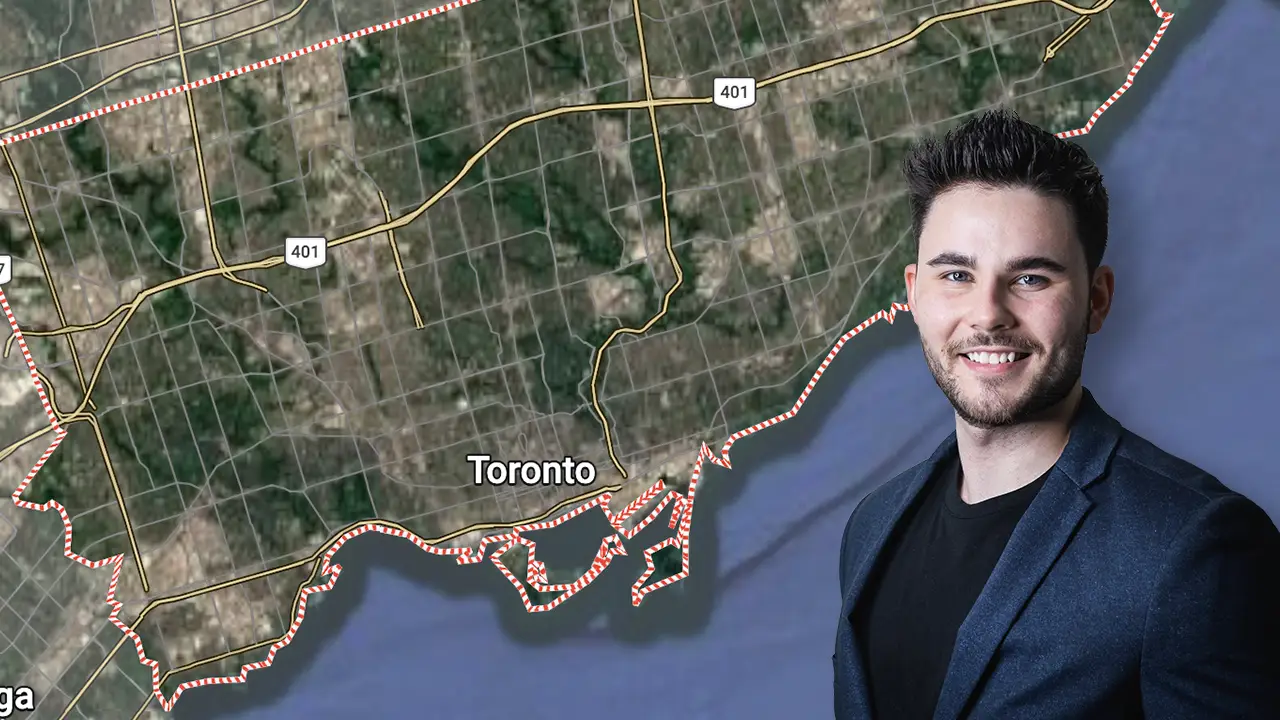
Choosing a Toronto real estate agent who already works in your specific neighbourhood changes the outcome of your sale or purchase more than most buyers and sellers realize. Picture two agents with the same licence and the same brokerage logo on their signs. One sold four homes on your street last year. The other has never set foot in your area. The right agent for your neighbourhood is the one who has done the actual work there, not the one with the biggest billboard.
Toronto is not one market. It is dozens of small ones stitched together, each with its own pace, price ceiling, and buyer behaviour. A top producer in Liberty Village condos might know little about bungalows in the Beaches. A strong negotiator downtown might never have handled a bidding war in Etobicoke. Even within a single postal code, a home backing onto a ravine sells differently than one three doors down facing a busy arterial road, and the agent who knows the difference without checking a map is worth more than the one who needs to look it up.
This guide walks through what separates a true neighbourhood specialist from a generalist, the questions worth asking before you sign anything, and the red flags I tell my own clients to watch for. By the end, you will know how to interview agents, check their track record, and pick the right realtor for your specific street, not the city as a whole.
None of this means you need the most expensive agent in the city or the one running the biggest ad campaign on transit shelters. It means matching the agent to the actual neighbourhood you are buying or selling in, the same way you would choose a specialist over a generalist for anything else affecting your finances.
Why the Right Toronto Real Estate Agent Makes All the Difference
A home sale is one of the largest financial transactions most people make. The agent representing you sets the asking price, manages every showing, and negotiates the final number with the other side. Get this wrong and you leave money on the table, or lose a home you wanted to buyers who moved faster. The commission rate barely moves between agents, yet the gap between a strong agent and a weak one in the same neighbourhood often shows up as tens of thousands of dollars in the final price, plus weeks or months of extra stress.
Negotiation skill compounds this effect. Give the exact same offer on the exact same home to two different agents, and one settles for full price after a calm back and forth while the other panics and accepts a lowball figure under pressure from a tight deadline. The difference rarely shows up in a listing description, yet it shows up clearly on the final closing statement.
Your Real Estate Journey Starts With the Right Agent
I had a client last year who interviewed three agents before listing her semi-detached house near Roncesvalles. Two of them pulled comparable sales from across the city. The third pulled six sales within four blocks of her front door and explained why each one mattered to her price, down to which homes had finished basements and which had street parking versus a private driveway. She listed with the third agent and sold above asking in nine days.
What a Great Agent Brings to a Complex Transaction
Multiple offers, financing conditions, inspection negotiations, and tight closing timelines turn a simple sale into a complex transaction fast. An agent who handles these regularly in your neighbourhood reacts faster, because the pattern is familiar. One who has not is learning on your file, while your money sits on the table. A seasoned agent already knows which lawyers move quickly near a tight closing date and which lenders tend to slow down a financing condition, and this kind of working knowledge rarely shows up on a website bio.
Checking a Toronto Real Estate Agent’s License and Standing With the Real Estate Council
Every real estate agent in Ontario needs a valid license issued through RECO, the Real Estate Council of Ontario. Before you sign anything, confirm the agent holds an active license and has no disciplinary history. This step takes five minutes and protects you for the entire transaction. Skipping it because an agent seems friendly or came recommended by a friend still leaves you exposed if something goes wrong later in the deal.
Errors and omissions insurance works the same way. A licensed agent in good standing carries this coverage automatically through their brokerage, which protects you if a genuine mistake happens during your transaction. An unlicensed person operating outside these rules leaves you with no protection at all if something goes wrong.
Confirming Good Standing Before You Sign a Representation Agreement
RECO’s public registry lets you search any agent by name and see their license status, brokerage, and standing. A buyer representation agreement or listing agreement is a legal contract. Sign it once you know the person across the table is in good standing, and not a moment before. If an agent resists answering questions about their licensing or brokerage history, treat the hesitation as information in itself.
Starting Your Search for Local Agents in Your Target Neighbourhood
Start narrow, not wide. Search for agents tied to your specific pocket of Toronto rather than the city overall. Local Facebook groups, neighbourhood association newsletters, and the for-sale signs already on your street tell you who is active where you live. For a broader breakdown of the fundamentals, I cover the basics in my how to choose a real estate agent guide, though neighbourhood fit deserves its own checklist beyond the general advice.
Open houses are another underused resource. Walking through two or three open houses in your target area lets you watch how different agents handle questions from strangers off the street, which tells you a lot about how they will handle questions from you once you are a client.
Ask people who already live on your street or in your building who they used, and whether they would use the same person again. A neighbour who sold three doors down last spring is a more useful source than any online directory, because they already know how the agent performed under the exact conditions you are about to face.
Past Clients, Online Reviews, and Toronto Realtors
Read past client reviews on Google and on the agent’s own site. Look past the star rating and read what people wrote. A review mentioning a specific street, a specific negotiation, or a specific closing date carries more weight than five generic five-star ratings with no detail behind them. A review stating “sold my condo on Jameson Avenue eight days after listing, three offers” tells you something a five-star rating with no text never will.
Polished Website vs. Real Market Knowledge
A polished website and a strong social media following do not prove neighbourhood knowledge. Ask the agent to name three recent sales within walking distance of your home and explain why each sold at its price. A real specialist answers without hesitation. One client I worked with in North York interviewed an agent who failed to name a single recent sale on her street. She moved on and found someone who knew the building two doors down personally, including the fact its elevator had been out of service for a month the previous year. The new agent sold her unit in eleven days.
How to Interview Agents and Compare Communication Style
Treat the first meeting as an interview, not a sales pitch you sit through. You are choosing someone to represent your interests in one of the largest transactions of your life. Bring questions, and pay attention to how directly they get answered. An agent who deflects a direct question about their recent sales or their fee structure is telling you something about how they will handle harder conversations later in your transaction.
Key Questions to Ask Potential Agents
Bring a short list of questions to every interview, and ask the same ones to each agent so you compare answers directly.
How many homes have you sold within this neighbourhood in the past year?
What is your average list price to sale price ratio here?
How will you communicate with me, and how often?
What happens if my home does not sell within sixty days?
Will you connect me with two past clients from this area?
Score the answers against each other rather than judging them in isolation. An agent who hesitates on the first question but answers the rest confidently is a different risk than one who hesitates on every single question.
Why Communication Style Matters Through a Stressful Sale
Selling or buying a home gets stressful fast, especially during a bidding war or after a home inspection turns up a problem. Ask how the agent prefers to communicate, by text, phone, or email, and how quickly they respond outside business hours. Mismatched communication style turns small problems into bigger ones.
Set expectations early, in writing if possible. A quick text confirming “I will update you every Friday unless something urgent comes up” prevents weeks of wondering whether your agent is actively working your file or has moved on to someone else’s. A client who needs a quick text update paired with an agent who only calls during business hours spends the whole transaction feeling out of the loop, even if the agent is doing strong work behind the scenes.
What Sets a Full Service Realtor Apart From Other Agents
A full service realtor handles pricing strategy, professional photography, staging advice, marketing, showings, negotiation, and paperwork from start to finish. A discount or limited-service option might list your home on MLS for less money, but leaves you to handle showings, negotiation, and legal details on your own. The savings on commission rarely cover the cost of a missed negotiation point or a poorly worded clause in an offer.
Professional photography alone changes how many people click into a listing online, and staging advice often turns an empty or cluttered room into the photo buyers remember after viewing a dozen other homes the same weekend. A full service realtor budgets for these costs as part of the overall marketing plan, rather than charging extra for each piece separately.
Track Record and Established Relationships
Ask for a list of homes sold in the past twelve months, with addresses and final sale prices. An agent with established relationships among other Toronto agents also hears about new listings before they hit MLS, which gives their buyer clients an edge in a tight market. Those relationships also smooth over rough patches during a deal, since two agents who already trust each other resolve a disagreement over a repair credit faster than two strangers negotiating through email.
Ask how many of their last ten deals involved another agent they already knew personally versus a stranger on the other side. A higher number usually signals deeper roots in the local agent community, not simply a longer career.
Why Granular Knowledge of North York, Lawrence Market, and Other Neighbourhoods Matters
Granular knowledge means knowing which side of a street faces a busy road, which school catchment a home falls into, and which building has a reputation for slow elevators. An agent who knows North York in detail speaks to these specifics around Lawrence Market without opening a laptop to check. According to the Canadian Real Estate Association, national sales figures shift month to month, and the Toronto Regional Real Estate Board tracks Toronto’s many micro-markets separately for this exact reason. A street near a subway line often commands a different price than one ten minutes further out, even inside the same official neighbourhood boundary.
This works both directions. A buyer with a neighbourhood specialist on their side hears about a coming listing before it reaches a public website, or learns a specific building has an assessment coming up before falling for a unit inside it. Sellers benefit from the same depth of knowledge in reverse, through sharper pricing and a marketing plan built around what already draws buyers to the area.
Recent Sales and Local Amenities
A neighbourhood specialist tracks recent sales street by street and knows how proximity to a subway stop, a park, or a strong school changes price. Local amenities like a popular coffee shop, a community centre, or proximity to the Lawrence Market itself often raise buyer interest more than square footage alone. I have walked buyers past a coffee shop on a showing route on purpose, because it answered a question about the neighbourhood faster than any data sheet would.
A good specialist also tracks which renovations move price in your specific area. A finished basement matters enormously in a family neighbourhood and barely registers in a condo-heavy strip, where storage space matters more than square footage below grade.
How Neighbourhood Knowledge Affects List Price and Purchase Price
Setting the right list price needs comparable sales from the same pocket of the city, not citywide averages. The same logic applies to the purchase price a buyer’s agent recommends offering. A few hundred metres in Toronto move value more than most people expect. I have seen two homes two streets apart, nearly identical in size and condition, settle tens of thousands of dollars apart simply because one backed onto a quiet park and the other faced a four-lane road.
Understanding the Buyer Representation Agreement Before You Sign
A buyer representation agreement is a contract between you and your agent. It outlines how long the agreement lasts, how the agent gets paid, and what duties they owe you. Read every clause before signing, and ask about anything unclear, including any holdover period in effect after the agreement ends and any exclusivity terms tied to specific properties.
Commission structure should be written into the agreement in plain numbers, not buried in a clause you need a lawyer to translate. Ask directly how the agent gets paid if you buy a home they did not list themselves, and how the figure compares to buying one of their own listings.
Protecting Your Best Interest as a Buyer
Your agent owes you a duty to act in your best interest throughout the transaction. This includes disclosing anything they know about a property, presenting every offer fairly, and avoiding situations where they represent both sides without your informed consent. Ontario rules around multiple representation are strict for good reason, and a careful agent walks you through exactly what it means before it ever becomes relevant to your deal.
Working With a Listing Agent or Seller’s Agent During the Selling Process
The listing agent represents the seller and works to get the highest price and the best terms for the seller’s side of the deal. Understanding this role early in the selling process keeps expectations clear for everyone at the table. A seller who treats the listing agent as a passive paperwork handler misses out on the strategic pricing and marketing decisions a strong agent brings to the table from day one.
Ontario requires written disclosure whenever an agent represents both sides of a transaction, known as multiple representation. Read this form carefully and ask questions before signing it, since it changes the level of advice and negotiation support your agent is legally allowed to provide once both parties are involved.
How a Listing Agent Sets the Final Sale Price
The listing agent and seller agree on an asking price after reviewing comparable sales, current demand, and the condition of the home. The final sale price often differs from the list price once offers come in, especially in a competitive market with multiple bidders. A well-priced listing in the right neighbourhood sometimes draws five or six offers within days, while an overpriced one in the same area sits unsold for weeks before a price adjustment.
What a Seller’s Agent Does Differently
A seller’s agent markets the property, manages showings, and negotiates on behalf of the seller alone. Representing a buyer in the same transaction requires written consent from both sides, since the agent’s duty belongs to the seller first. This distinction matters most during negotiations over price and conditions, where a seller’s agent pushes for terms benefiting the seller specifically.
From Open House to Closing Process: What to Expect During Your Home Sale
An open house brings a wave of visitors through your home over a few hours, often producing the first real offers of a sale. From there, the path runs through inspection periods, financing conditions, and finally the closing process, where ownership officially changes hands. A local Toronto real estate agent who already operates in your pocket of the city moves through each stage faster, simply because the process is familiar. Expect the full path from accepted offer to closing day to run anywhere from thirty to ninety days, depending on financing and the conditions both sides negotiate.
Home Inspections and Due Diligence
A home inspection gives the buyer a chance to walk through every system in the house, from the roof to the foundation, before removing conditions. I recall helping a client through a tense closing where a home inspection turned up knob and tube wiring two days before the deal was set to close. Because I already knew an electrician familiar with older homes in the area, we resolved the issue with a repair credit instead of losing the deal, and the closing proceeded on schedule. Due diligence also includes reviewing the status certificate for a condo, checking for outstanding liens, and confirming property taxes are current.
A financing condition usually runs five to ten business days, giving the buyer’s lender time to confirm the mortgage before the deal becomes firm. A status certificate review for a condo often takes a similar window, since the property manager needs time to pull the building’s financials, reserve fund study, and meeting minutes together. An agent who tracks these timelines closely avoids the last-minute scramble happening when a condition deadline lands on a weekend or a holiday and nobody flagged it early enough to extend.
Final Thoughts: Choosing the Best Real Estate Agent for Your Dream Home
The best real estate agent for your dream home is rarely the one with the most followers or the biggest sign on the lawn down the street. It is the one who already knows your specific pocket of Toronto, answers your questions directly, and treats your transaction like it matters, not like file number forty of the month. If you want a deeper list of interview questions before your first meeting, I put together a longer questions to ask a Toronto real estate agent breakdown worth reading first.
A wide social media following or a name recognized across the entire city sounds reassuring, but depth in your specific pocket of Toronto beats reach across the whole map almost every time. An agent active on six blocks near you tends to know more buyers, more comparable sales, and more local quirks than one with ten thousand followers and a handful of sales scattered across the GTA.
Giving Yourself Adequate Time Before the Closing Process
Rushing into an agreement with the first person you meet rarely ends well. Give yourself adequate time to interview two or three agents, check their license status, read their reviews, and ask about their experience in your neighbourhood before signing anything. The extra week spent comparing agents costs nothing next to the cost of choosing the wrong one for your street.
Before you sign anything, drive by a few other homes the agent has listed or sold nearby. Seeing the actual sign placement, the photo quality on the listing, and how a property showed during its own open house tells you more about an agent’s standards than any conversation in an office ever will.
If you are weighing your options and unsure where to start, I am always happy to talk it through. I’m Marco Pedri, broker with Shoreline Realty, and I work specific Toronto neighbourhoods rather than the whole city at once. Feel free to reach out to me directly, your Toronto real estate agent right here in the city, and we’ll talk about your specific street, your home, and a plan built around where you live, not a generic one pulled from across town.